
Why Your Child's Big Reactions Aren't Bad Behaviour (And What Actually Helps)
Jul 10, 2026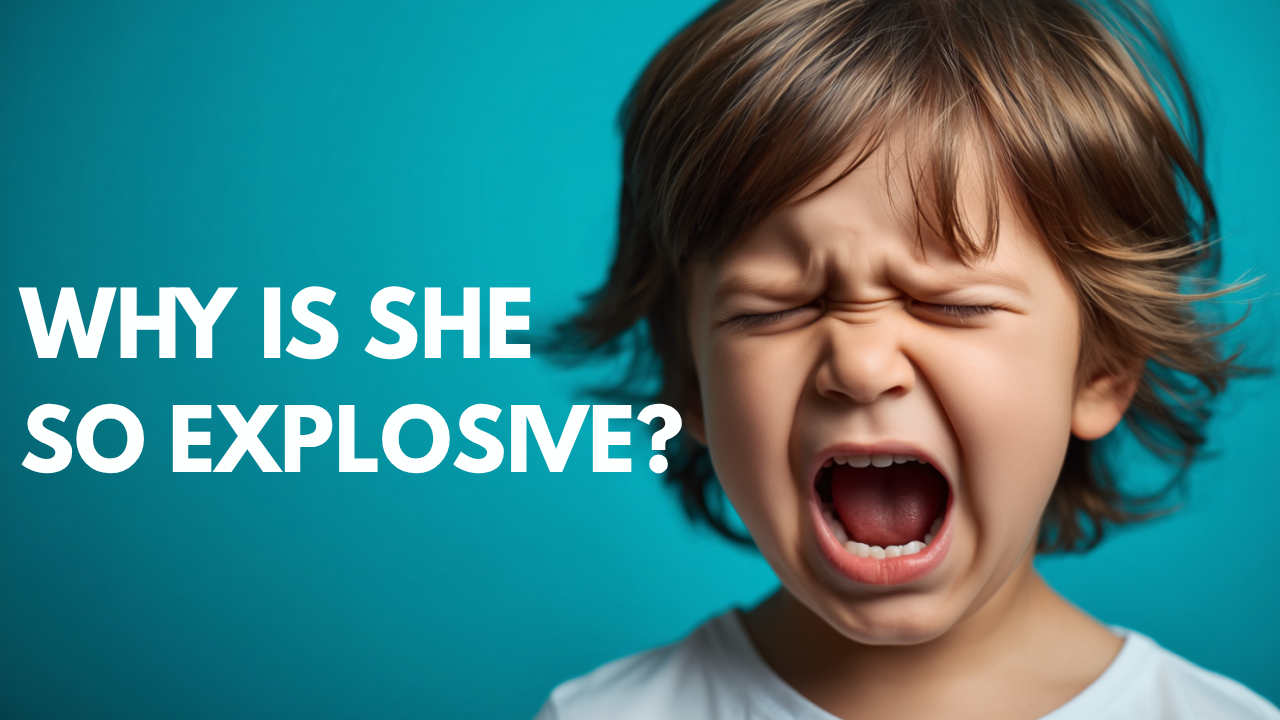
Many years ago I took my four year old to the park for a treat, an ice cream. She chose mint choc chip. I gently checked, are you sure you'll like that one, and she was adamant she would. One bite in, she thrust the cone straight back at me. "I don't like it. I want a different one."
I felt that familiar pull, just buy her another, it's meant to be a treat, what's the harm? And honestly, there's nothing wrong with doing that. But that day, I decided to hold firm instead. I got down to her level and said, gently, "I know it's really hard, you thought you'd like it. You can try it again, eat the cornet, or we say goodbye to it."
She shouted at me. Told me I was a horrible mummy. In front of a park full of people who all turned to look. My face went hot with embarrassment. But underneath that, I knew something else too: this was exactly the kind of moment she needed, to feel that disappointment all the way through, and come out the other side knowing she could cope with it.
That's what we're getting into here. What's really behind these big, explosive reactions, why some children have them far more than others, and what actually helps when you're in the middle of one, ice cream or otherwise.
It's not defiance. It's overwhelm.
We all want to raise calm, resilient kids. But big feelings don't stay big feelings for long, they turn into behaviour. Hitting. Screaming. Throwing. A cone thrust back at you in front of a full park.
And in that moment, it's easy to think the worst. Is my child being naughty? Manipulative? What am I doing wrong?
Here's what I want you to know: you have a good kid having a hard time. Not a bad kid doing bad things.
Children are born with all the feelings and none of the skills to manage them. Disappointment, embarrassment, a plan going sideways, these are massive for a small person who hasn't learned what to do with them yet. So the feeling comes out sideways instead, as a scream, a slammed door, a cone shoved into your hand.
Some kids feel it all more intensely, and that's not a flaw
Here's something I want every parent of a big-feelings child to hear: if your child reacts more intensely than their sibling, or their friend's child, that's not something you caused and it's not something they're choosing.
Some children are simply wired to feel things more, and to feel them faster. It's temperament, not character. The same way some children are naturally cautious and some are naturally bold, some are naturally intense and some are naturally easygoing. You didn't create it by being too soft or too strict, and your child isn't being difficult on purpose. They're just built to feel the volume turned up.
That doesn't mean you throw out boundaries, it means you hold them with extra patience, because this child needs more support building the skills that come more easily to others.
When it's not about the feeling at all
Sometimes explosive behaviour isn't really about emotion, it's about the body.
A busy soft play centre. A scratchy label in a jumper. The noise in a supermarket, the trolleys, the tannoy, the lights. None of it looks dramatic from where you're standing. But for a child whose nervous system takes in more sensory information than it can process, it can genuinely tip into too much, and the meltdown that follows isn't really about the thing that seemed to trigger it.
A few signs it might be sensory rather than purely emotional:
- The meltdown happens in loud, bright, hot or crowded places more than anywhere else
- Your child covers their ears, avoids certain textures, or gets fussy about tags and seams
- They melt down at the end of a busy day, even if the day itself seemed to go fine
- Calm, quiet, low-stimulation environments seem to help them reset fastest
If this sounds familiar, the most useful thing you can do isn't more talking, it's less input. Dim the lights, lower your voice, give them space, and let their system come back down before you try to connect or teach anything.
If these moments are frequent, intense, or getting in the way of daily life as your child gets older, it's always worth a conversation with your GP or a child therapist too. That's not you failing. That's you paying attention.
Three things that help when it's happening
✅ 1. Stay calm yourself
This is the hardest one and the one that matters most. Your child's nervous system borrows yours in that moment, they cannot calm down until you do. You don't need to fix anything or reason with them. You just need to be the calm one, even with a park full of people watching.
Breathe. Drop your shoulders. Remind yourself: "this will pass."
2. Name it, then hold it
Acknowledge the feeling. Hold the line anyway. That's exactly what I did with the ice cream, "I know it's really hard, you thought you'd like it," names the feeling, and the next part holds the boundary.
Resist the urge to explain it five different ways, they can't take in a speech when they're this overwhelmed. One calm line does more than a long one.
If things get physical, get down to their level and keep it short:
"I won't let you hit. Hitting hurts."
That's it. No lecture. No bargaining. Just calm clarity. You may need to firmly hold their arms or legs to stop them hitting you. Try to do that without your own aggression (I know this is hard!)
✅ 3. Repair, once everyone's calm
The real teaching doesn't happen mid-meltdown, it happens afterwards.
"That was such a big disappointment earlier, about the ice cream. It's hard when something isn't what you hoped."
You're not excusing what happened. You're giving them something to reach for next time, and you're showing them that big feelings don't damage your relationship.
We will lose it
You won't get this right every time. None of us do. Some days you'll stay calm, other days you'll snap, and that's alright too, because what your child needs isn't a parent who never loses it. They need one who comes back afterwards, repairs, and stays calm more often than not.
That consistency, not perfection, is what teaches your child, whether they're naturally intense or naturally easygoing, that their biggest feelings are safe with you. Even the ones over ice cream.
💬 If you'd like some support working through what's going on with your own child, book a free discovery call and we'll take a proper look together.
Or download my free guide 'Why kids have tantrums - 10 calm ways to respond' HERE
Stay connected with my parenting tips, inspiration and special offers.
Join my mailing list to receive the latest news and updates from me.
Don't worry, your information will not be shared.
We hate SPAM. We will never sell your information, for any reason.
